
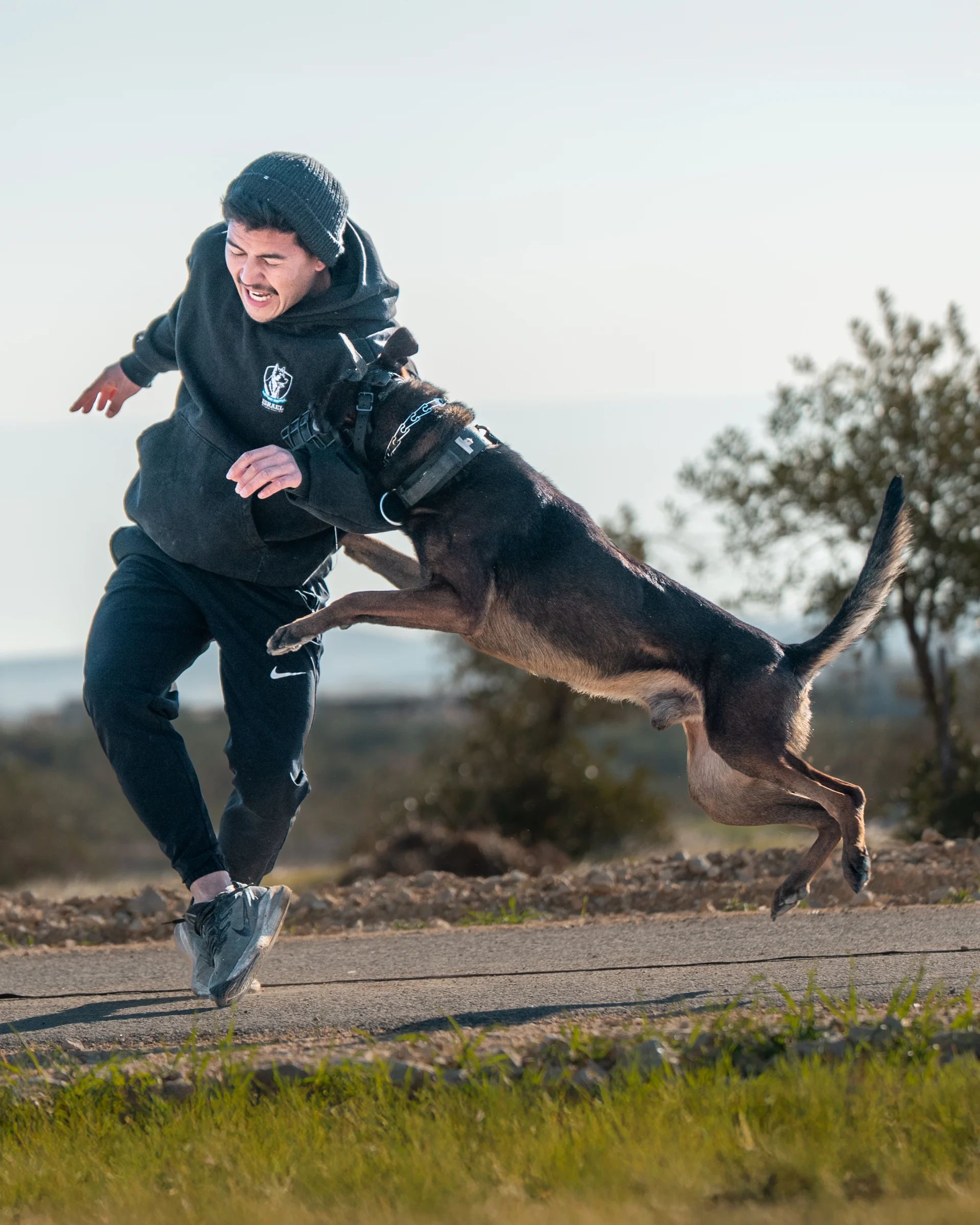
Are Protection Dogs Legal?
Protection Dog Laws by State
Yes. Owning a trained protection dog is legal in every U.S. state, and no federal law restricts it. What changes from state to state is who is responsible if a dog injures someone and which local rules apply. Find your state below, or call (323) 868-3524 to talk it through with our team.
How Protection Dog Laws Work
No. No federal law bans or licenses private ownership of protection, guard or attack-trained dogs. Ownership is regulated by states, counties and cities, which is why the rules below vary by state.
Every state takes one of three broad approaches when a dog injures someone:
| Approach | What it means | States |
|---|---|---|
| Strict liability | The owner is responsible for a bite even if the dog had never shown aggression, subject to exceptions such as trespassing or provocation. | 22 states, including California, Florida, Illinois, New Jersey and Ohio |
| Modified or mixed | Strict liability applies only in certain situations: off the owner’s property, for medical bills only, or for dogs running loose. | 16 states, including New York, Pennsylvania, Colorado and Georgia |
| One-bite or negligence | The injured person must show the owner knew the dog was dangerous or was careless, for example by breaking a leash law. | 12 states, including Texas, Virginia and Nevada |
No. Many state dog-bite laws exempt police and military dogs, but those exemptions cover only dogs working for a government agency. A privately owned protection dog is held to the same standard as any other dog in your state.
Most states have a separate dangerous- or vicious-dog law. After a serious incident, authorities can declare a dog dangerous and require registration, insurance, special enclosures or warning signs, and in serious cases can order the dog removed. A stable, obedient dog that releases instantly on command is far less likely ever to be part of one of these cases.
Some cities and counties restrict particular breeds. About 22 states block or limit those local breed rules; the rest leave it to local governments. Belgian Malinois, German Shepherds and Dutch Shepherds are rarely targeted, but always check your city and county code. Read more in Breed-Specific Legislation and Your Protection Dog.
A few do. New York City, for example, requires guard and attack dogs to be registered with the Health Department, with a special tag and a posted warning sign. These rules usually target dogs that guard premises, so check how they apply to your dog’s role.
Yes, and they are often stricter than the law.
- HOAs and condo boards can limit breeds, size or number of dogs. See Protection Dogs in HOA Communities.
- Landlords can set their own pet rules in a lease.
- Insurers may exclude certain breeds or trained dogs. See Homeowners Insurance and Protection Dogs.
- License your dog with your city or county and keep rabies vaccination current.
- Read your city and county code for leash, breed and guard-dog rules.
- Check your HOA covenants, condo bylaws or lease.
- Tell your homeowner’s or renter’s insurer and ask about umbrella coverage.
- Learn your state’s liability rule on this page and keep your dog under control in public.
For the ethical side, read Protection Dog vs Attack Dog: Legal and Ethical Considerations.
Protection Dog Laws in the Northeast
Yes. Protection dogs are legal to own in Connecticut. Owners and keepers are strictly liable for injuries, except to people trespassing or teasing or abusing the dog. Children under 7 are presumed not to have provoked a dog. Connecticut bars local breed-specific rules.
Yes. Protection dogs are legal to own in Maine. Owners are strictly liable for injuries off their property; on their property, negligence must be shown. Maine bars local breed-specific rules and has dangerous-dog provisions.
Yes. Protection dogs are legal to own in Massachusetts. Owners and keepers are strictly liable for injuries, except to people trespassing or teasing or abusing the dog. Children under 7 are presumed not to have provoked a dog. Massachusetts limits breed-specific dangerous-dog rules.
Yes. Protection dogs are legal to own in New Hampshire. Owners and keepers are liable for injuries to people or property, unless the victim was trespassing or committing another wrong. The state also regulates menacing and vicious dogs.
Yes. Protection dogs are legal to own in New Jersey. Owners are liable for bites in public or where the victim is lawfully present, regardless of the dog’s history. New Jersey’s Vicious and Potentially Dangerous Dog Act cannot target breeds.
Yes. Protection dogs are legal to own in New York. Owners of dogs found to be dangerous are strictly liable for medical costs; other damages require proof the owner knew of vicious tendencies. New York City requires guard and attack dogs to be registered with the Health Department, so New York City buyers should check how that applies.
Yes. Protection dogs are legal to own in Pennsylvania. Owners must pay the medical costs of an attack regardless of fault; full damages require negligence or knowledge of dangerous tendencies. Pennsylvania limits breed-specific dangerous-dog rules.
Yes. Protection dogs are legal to own in Rhode Island. Owners are strictly liable for bites on public roads or outside the owner’s enclosure; inside it, negligence rules apply. Rhode Island generally bars local breed-specific rules.
Yes. Protection dogs are legal to own in Vermont. There is no dog-bite statute; an injured person must show the owner knew of dangerous tendencies or was negligent. Vermont regulates vicious domestic animals.
Protection Dog Laws in the Southeast
Yes. Protection dogs are legal to own in Alabama. State law (Ala. Code § 3-6-1) makes owners liable for unprovoked bites on the owner’s property, with damages limited to actual expenses unless the owner knew the dog was dangerous. Bites elsewhere fall under common-law negligence rules. Alabama also has a dangerous-dog law, known as Emily’s Law.
Yes. Protection dogs are legal to own in Arkansas. There is no dog-bite statute; liability depends on showing the owner knew of dangerous tendencies or was negligent. Dog rules, including any breed rules, are mostly set by cities and counties.
Yes. Protection dogs are legal to own in Delaware. Owners are liable for injuries caused by their dog, except to people trespassing, committing a crime or provoking the dog. Delaware bars local breed-specific rules and has a statewide dangerous-dog law.
Yes. Protection dogs are legal to own in Florida. Under § 767.04, owners are liable for bites in public or where the victim is lawfully present. A clearly displayed “Bad Dog” sign can be a defense, except for victims under 6, and the victim’s own negligence can reduce damages. Florida limits breed-specific dangerous-dog rules.
Yes. Protection dogs are legal to own in Georgia. Owners are liable when a dangerous or vicious dog is carelessly managed or allowed to run loose, and breaking a local leash law can be evidence of that. Georgia’s Responsible Dog Ownership Law covers dangerous dogs.
Yes. Protection dogs are legal to own in Kentucky. Owners are liable for damage their dog causes to people, livestock or property, and the law defines “owner” broadly. Kentucky also penalizes owners of attacking dogs.
Yes. Protection dogs are legal to own in Louisiana. Owners are liable for injuries they could have prevented, unless the victim provoked the dog. Louisiana has statewide dangerous-dog laws, and parishes may add their own rules.
Yes. Protection dogs are legal to own in Maryland. A bite creates a presumption that the owner knew the dog was dangerous, which the owner can rebut, and owners are strictly liable for dogs running at large. Maryland has a statewide dangerous-dog law.
Yes. Protection dogs are legal to own in Mississippi. There is no dog-bite statute; an injured person must show the owner knew or should have known of dangerous tendencies. Dog rules are mostly local.
Yes. Protection dogs are legal to own in North Carolina. Strict liability applies to dogs officially classed as dangerous and to dogs over six months old running loose at night. Otherwise, negligence must be shown.
Yes. Protection dogs are legal to own in South Carolina. Owners are liable for bites in public or where the victim is lawfully present, unless the dog was provoked. South Carolina limits breed-specific dangerous-dog rules.
Yes. Protection dogs are legal to own in Tennessee. Owners are liable when a dog is running at large or not under control; on the owner’s residential property, the owner must have known the dog was dangerous. Protecting a person from attack is among the recognized defenses.
Yes. Protection dogs are legal to own in Virginia. There is no dog-bite statute; an injured person must show the owner knew of dangerous tendencies. Separate dangerous and vicious dog laws carry their own penalties, and Virginia bars local breed-specific rules.
Yes. Protection dogs are legal to own in West Virginia. Owners are strictly liable for damage done by a dog running at large; on the owner’s property, negligence rules apply.
Protection Dog Laws in the Midwest
Yes. Protection dogs are legal to own in Illinois. Under the Animal Control Act, owners are liable when a dog injures someone acting peaceably in a place they are allowed to be, with provocation and trespass as defenses. Illinois bars local breed-specific rules.
Yes. Protection dogs are legal to own in Indiana. Strict liability protects only people performing legal duties, such as mail carriers. Other injured people must show the owner knew of dangerous tendencies or was negligent. Owners of dogs that bite can also face criminal penalties.
Yes. Protection dogs are legal to own in Iowa. Owners are strictly liable when their dog attacks a person or domestic animal, unless the victim was doing something unlawful that contributed to the injury. Iowa has no statewide breed preemption, and some cities restrict breeds.
Yes. Protection dogs are legal to own in Kansas. There is no dog-bite statute; an injured person must show the owner knew of dangerous tendencies or was negligent. Dog rules are mainly set by cities and counties.
Yes. Protection dogs are legal to own in Michigan. Owners are liable for unprovoked bites on anyone lawfully in a public or private place, regardless of the dog’s history. Michigan also has a statewide dangerous-animal law.
Yes. Protection dogs are legal to own in Minnesota. Owners are fully liable when their dog attacks, without provocation, someone acting peaceably where they are allowed to be. Minnesota limits breed-specific dangerous-dog rules.
Yes. Protection dogs are legal to own in Missouri. Owners are strictly liable for unprovoked bites in public or where the victim is lawfully present, and can also be fined. Missouri has no statewide breed preemption, and dozens of local communities restrict certain breeds, so check your city code.
Yes. Protection dogs are legal to own in Nebraska. Owners are strictly liable for injuries to people and domestic animals, except to trespassers. Nebraska has a statewide dangerous-dog law.
Yes. Protection dogs are legal to own in North Dakota. There is no dog-bite statute; an injured person must show the owner knew of dangerous tendencies or was negligent. Dog rules are mostly local.
Yes. Protection dogs are legal to own in Ohio. Owners, keepers and harborers are liable for any injury their dog causes, except to people trespassing, committing a crime on the property, or teasing or abusing the dog. Ohio regulates nuisance, dangerous and vicious dogs.
Yes. Protection dogs are legal to own in South Dakota. There is no dog-bite statute; an injured person must show the owner knew of dangerous tendencies or was negligent. South Dakota bars local breed-specific rules.
Yes. Protection dogs are legal to own in Wisconsin. Owners are strictly liable for injuries to people, domestic animals or property, and damages can be doubled if the owner knew of a previous bite.
Protection Dog Laws in the Southwest
Yes. Protection dogs are legal to own in Arizona. Owners are strictly liable for bites in public or where the victim is lawfully present, with exceptions for provocation and trespassers. Arizona bars local breed-specific rules and has a statewide vicious-animal law.
Yes. Protection dogs are legal to own in New Mexico. There is no dog-bite statute; an injured person must show the owner knew of dangerous tendencies or was negligent. New Mexico has a statewide Dangerous Dog Act.
Yes. Protection dogs are legal to own in Oklahoma. Owners are liable for unprovoked bites on anyone lawfully present, regardless of the dog’s history. Oklahoma limits breed-specific dangerous-dog rules.
Yes. Protection dogs are legal to own in Texas. There is no dog-bite statute; an injured person must show the owner knew of dangerous tendencies or was negligent, for example by breaking a leash law. Under Lillian’s Law, owners can face criminal charges for certain serious unprovoked attacks. Texas limits breed-specific dangerous-dog rules.
Protection Dog Laws in the West
Yes. Protection dogs are legal to own in Alaska. There is no dog-bite statute, so an injured person must show the owner knew of the dog’s dangerous tendencies or was negligent. Most dog rules are set locally, so check your borough or city code.
Yes. Protection dogs are legal to own in California. Under Civil Code § 3342, owners are strictly liable for bites in public or where the victim is lawfully present, regardless of the dog’s history. Trespassers are not covered. California limits breed-specific dangerous-dog rules and has a statewide dangerous-dog law.
Yes. Protection dogs are legal to own in Colorado. Owners are strictly liable for economic damages when a dog causes serious bodily injury to someone lawfully present, with exceptions for trespass, provocation and posted warnings on the owner’s property. Colorado also makes owning a dangerous dog that injures someone a crime.
Yes. Protection dogs are legal to own in Hawaii. Courts generally still require proof of the owner’s negligence in bite cases, though owners of known-dangerous dogs face stricter liability. Bringing a dog into Hawaii requires meeting the state’s rabies quarantine rules, including a microchip, rabies vaccinations and an approved blood test, so plan well ahead of delivery.
Yes. Protection dogs are legal to own in Idaho. Since 2016, state law makes owners subject to civil liability for unprovoked attacks on people who are not trespassing, though courts and lawyers disagree on how strict that rule is. Idaho also has at-risk and dangerous-dog provisions.
Yes. Protection dogs are legal to own in Montana. Strict liability applies only to bites inside incorporated cities and towns; elsewhere, negligence rules apply. Counties regulate dangerous dogs.
Yes. Protection dogs are legal to own in Nevada. There is no dog-bite statute; an injured person must show the owner knew of dangerous tendencies or was negligent. Nevada’s dangerous-dog law cannot be applied based on breed alone.
Yes. Protection dogs are legal to own in Oregon. Owners are strictly liable for economic damages such as medical bills and lost wages; other damages generally require negligence or known dangerousness. Oregon has statewide dangerous-dog provisions.
Yes. Protection dogs are legal to own in Utah. Owners and keepers are liable for damage their dog causes, regardless of its history. Utah bars local breed-specific rules.
Yes. Protection dogs are legal to own in Washington. Owners are liable for bites in public or where the victim is lawfully present, regardless of the dog’s history, unless the dog was provoked. Cities may keep breed rules only if they offer an exemption for dogs that pass a behavior evaluation.
Yes. Protection dogs are legal to own in Wyoming. There is no dog-bite statute; an injured person must show the owner knew of dangerous tendencies or was negligent. Dog rules are mostly set locally.
Protection Dog Law FAQs
Usually, but private rules may limit breed, size or number of dogs. Read your lease or covenants first. See Protection Dogs in HOA Communities.
It depends on the policy. Some insurers exclude certain breeds or trained dogs. See Homeowners Insurance and Protection Dogs.
Yes. Keep rabies and health records with you. Hawaii has strict entry rules, and airlines set their own policies. See Traveling with Your Protection Dog.
No. Protection is not a disability-related task, so a protection dog doesn’t get service-dog access rights. See Can a Protection Dog Also Be a Service Dog?.
Own a dog that is stable, obedient and under control. Every Israel Protection K9 dog is trained to engage only on command and release instantly. Browse our available protection dogs or read about Belgian Malinois, German Shepherd and Dutch Shepherd protection dogs.
Disclaimer
This guide is general information, not legal advice. Laws change and local rules vary. Consult a licensed attorney in your state about your situation. Last reviewed: October 2026.