November 2, 2026
The First 30 Days With a Protection Dog
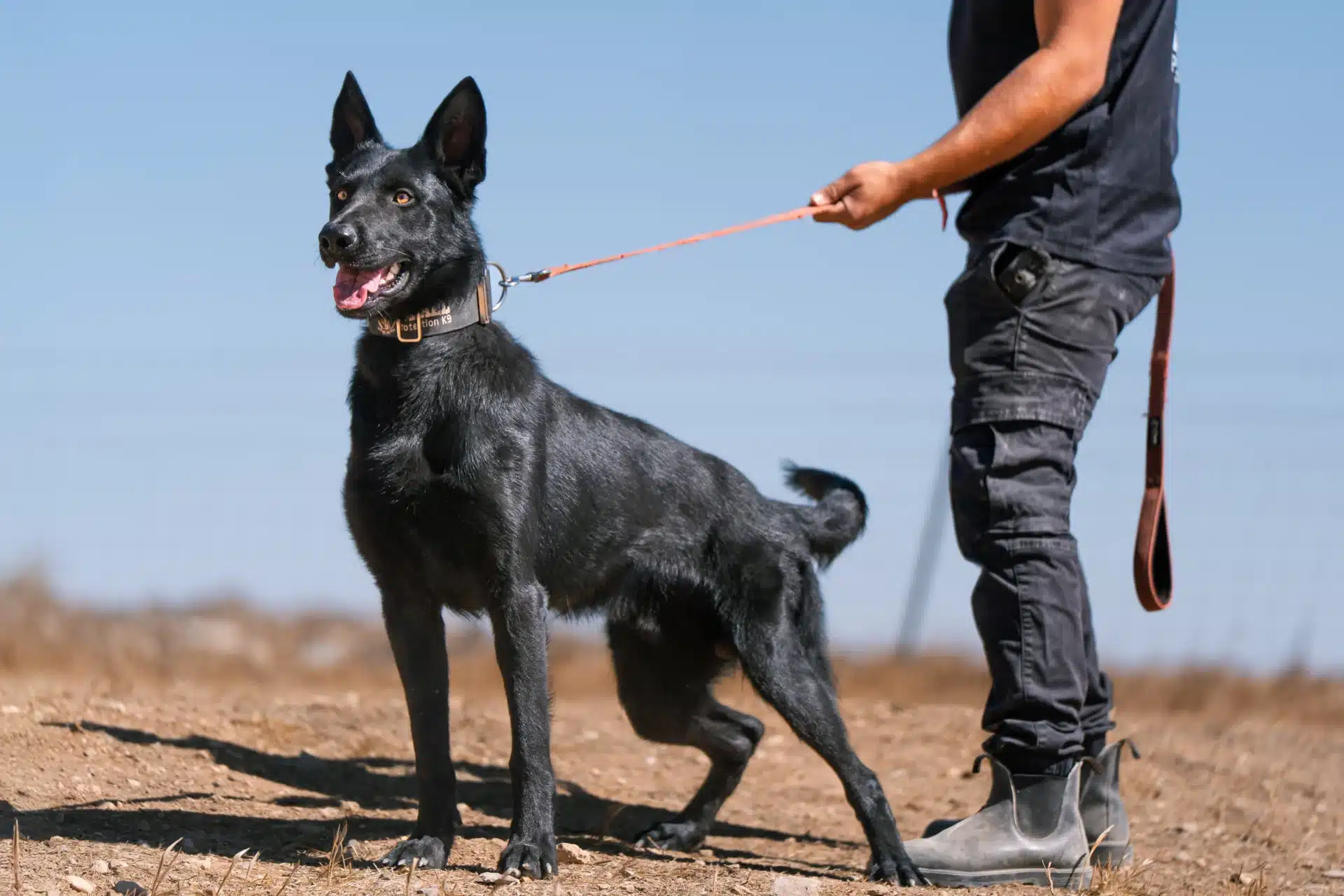
The first 30 days with a protection dog are about trust and consistency. Your trainer helps you settle the dog in during week one. After that, you hold the same rules and routine, handle the dog every day and bring your questions to your weekly follow-ups.
Key Takeaways
- A trained dog still has to learn your home, your voice and your rules.
- One set of rules from every household member prevents most early problems.
- Calm, boring days are a good sign, not a wasted opportunity.
- Don’t test the dog’s protection work yourself.
Before your dog arrives, work through our 2-week home preparation checklist.

What Does the First Month Look Like?
| Week | Your focus | You’re on track if |
|---|---|---|
| Week 1 | Handover and bonding | You can give the basic commands and the dog is starting to look to you |
| Week 2 | Daily routine | The dog knows where it eats and rests, and settles more quickly |
| Week 3 | New places | The dog stays responsive to you in busier settings |
| Week 4 | Long-term habits | The routine feels normal and everyone at home follows it |
Week 1: Delivery and Handover
Your dog is hand-delivered, and a trainer stays for a week of hands-on coaching on commands, handling and everyday situations. Use this week to ask every question you have, however small. Your trainer is there in your house, so show them the real problem spots: the front door, the busy street, the visiting neighbor and the room where the kids play.
We suggest feeding by hand this week, using each piece of food as a reward for commands the dog already knows. It takes a little longer than filling a bowl, but it teaches the dog that good things come from you. Have every adult in the home take a turn. Older children can join in too, with an adult beside them and the trainer’s guidance.
Do this week: write down the exact commands and hand signals, and put the list somewhere everyone can see it. Small differences in wording can confuse a dog.
Week 2: Build Your Routine
Your trainer has gone, and this is where many owners feel a dip in confidence. That’s normal. The dog may also test a rule or two now that its surroundings have become familiar. Stay calm and stay consistent, because how you respond this week shapes what the dog expects from you.
- Feed, walk, train and rest at similar times each day.
- Keep command practice short and frequent. A few focused minutes several times a day works better than one long session.
- Choose where the dog is and isn’t allowed, such as furniture or bedrooms, then stick to it.
- Give the dog quiet time. A dog that’s constantly entertained doesn’t learn to settle.
- Keep introductions to guests and other pets slow, and follow what your trainer showed you.
Do this week: take the dog for its first vet visit if you haven’t yet, so your vet has a baseline record.
Week 3: Widen the Dog’s World
Once things are steady at home, start taking the dog into busier places, one step at a time. Begin at a quiet park at a slow hour before you try a crowded street. Practice on the way: a sit at the curb, a down outside a shop or a calm walk past a jogger.
Pay attention to your own behavior too. Dogs read their handlers closely, so a tight leash and a tense voice can send the wrong message. If something new happens, such as the dog staring at a passerby or ignoring a command, raise it at your follow-up call or in the group chat rather than guessing. These daily handling techniques will help.
Do this week: practice your daily routes and regular outings with the dog, including getting in and out of the car.
Week 4: Make It Normal
By now, the routine should feel like ordinary life. Use this week to look at what’s working and fix what isn’t. Are all household members following the same rules? Is one person doing all the training? Has anything slipped because the dog has been behaving so well?
This is also a good time to plan ahead. Set a weekly practice schedule, decide who covers the dog’s care when you travel, and talk through ongoing training with our team. If you plan to take the dog on trips, read our guide to traveling with a protection dog.
Do this week: write down your questions for the final monthly follow-up, including anything that still feels uncertain.
What Are the Most Common First-Month Mistakes?
- Different rules from different people. If one person allows the dog on the sofa and another doesn’t, the dog can’t win.
- Skipping practice because the dog is “already trained.” Training has to transfer to you, and that takes repetition.
- Showing the dog off. Hold off on inviting everyone you know in the first few weeks.
- Testing protection work on your own. Never stage a fake attack or ask a friend to act threatening. It can confuse the dog and put people at risk.
- Too much freedom too soon. Earn off-leash time and full run of the house gradually, with guidance.
- Waiting too long to ask for help. Small issues are much easier to fix early.
When Should You Contact Your Trainer?
Get in touch right away if the dog shows any aggression you can’t explain, stops responding to commands it knew last week, or seems afraid of someone at home. For sudden changes in appetite, energy or movement, call your vet first, since pain can change a dog’s behavior. Less urgent questions, like how to handle a houseguest or a trip, can wait for your next follow-up.
For more on everyday life, read about living with a trained family protection dog.
FAQs
How long until the dog bonds with me?
It varies by dog. The first month lays the foundation, and the bond keeps growing as you spend time together.
Is it normal if the dog seems unsettled at first?
Some unsettled behavior can be expected in a new home. Keep the routine steady and mention it at your next follow-up. If it continues or worries you, contact the team sooner.
What if I have a problem after the first month?
Our team stays reachable around the clock through your group chat. See what lifetime support includes.
When should my dog see a vet?
Register with a local vet before your dog arrives, and schedule a wellness visit for shortly after.